How a Specialty Broker Layers Technical Evidence Into an Autonomous Hardware Submission to Satisfy Algorithm and Human Underwriter Simultaneously
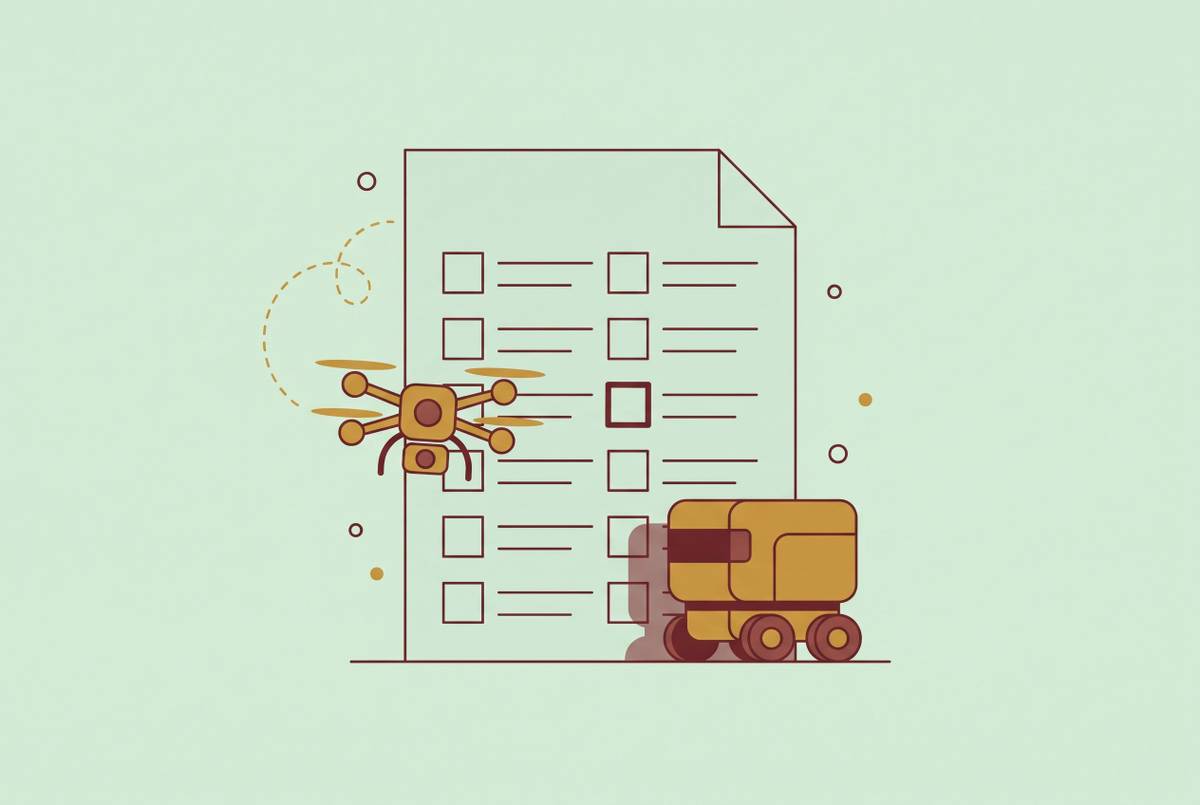
A strong submission pairs structured signals with technical narrative.

A strong underwriting submission for autonomous hardware combines structured signals for algorithmic triage with narrative evidence for human approval. A specialty broker connects the system’s decision-making architecture, failure modes, governance controls, and loss scenarios to the coverage requested. Submission quality depends on making those two layers consistent, so the insurer understands the risk before placement and the policy addresses it when a claim arrives.
Why an autonomous hardware submission faces two simultaneous audiences before a human ever reads it
Algorithmic triage and human underwriting ask different questions of the same submission. Automated screening reads the class codes, keyword matches, coverage-trigger language, and flags that show whether the data is complete. Missing or ambiguous signals can lead to conservative pricing or a decline before a human considers the technical explanation. The first gate is therefore not purely administrative. This first gate shapes whether the risk reaches an underwriter in a form they can assess.
The human underwriter then needs evidence explaining how the autonomy stack works, how failures propagate, and who governs deployment and incident response. A technically persuasive narrative cannot compensate for structured fields that classify the business incorrectly. Complete fields alone cannot show that the company understands its loss scenarios. Both reviews must keep the links between software, AI, and physical-system exposures clear.
What makes autonomous hardware a genuinely different submission problem than conventional commercial risk
WTW’s 2026 analysis examines responsibility for a warehouse accident in which a humanoid robot drops a heavy object. Responsibility may rest with the manufacturer for a design flaw, the software developer for an algorithm that misjudges balance, the operator for inadequate training or safety procedures, or the maintenance provider for a sensor or component failure. The submission must show how the possible causes differ and how the risks are linked.
Conventional insurance was not designed around machines that perceive their surroundings, decide independently, and interact physically with people and infrastructure. A compromised robot can expose data and also disrupt operations, damage property, or injure people.
WTW also draws on OSHA guidance showing that accidents often happen during programming, testing, or maintenance, when control or state-management errors may cause a robot to activate unexpectedly. Deployment conditions therefore belong in the risk description. A submission focused only on normal operation leaves out circumstances in which people and machines interact differently.
The coverage lines that must appear in the submission and what each one requires the writer to prove
General liability requires the submission to establish how bodily injury and property damage caused by robotic systems would be treated. AI exclusions may appear at renewal, so the company needs more than an assumption that ordinary liability coverage will respond. Products liability gives robot makers more to address. The submission must cover recall and field fix scenarios and show whether the policy covers or excludes autonomous behavior. These questions require attention to policy wording.
For Tech E&O, the company must show that it has documented its software governance. Axis identifies exposures including AI and algorithmic decision error, navigation and perception failure, SLA breaches, financial loss from system malfunction, and integration or deployment failure. The submission must connect those exposures to the company’s controls. Otherwise, naming the software risks establishes their existence without giving the underwriter a basis for assessing how they are managed.
Inland marine and equipment coverage require an account of hardware at fixed locations and in transit, including the transportation and logistics exposures of semiconductors, sensors, and batteries. The proof burden changes again for D&O. For venture-backed companies, that line protects board members and management, so the submission must establish governance controls that support confidence in leadership’s risk posture. Together, these lines require different evidence about the same business, rather than interchangeable answers on separate forms.
How the AI exclusion wave reshapes what a submission must address before it reaches any underwriter
RAND’s 2026 study found that some of the admitted market offered affirmative AI coverage, some had broad exclusions, and some was silent. A minority of carriers affirmatively cover AI, while a growing number have filed broad exclusions, with the surge beginning in summer 2025 and concentrated in general liability and commercial umbrella. The majority remain silent. Silence does not establish that an autonomous loss will be covered, particularly where the policy’s treatment of AI has not been clarified.
At least one carrier has filed an absolute AI exclusion affecting D&O, errors and omissions, and fiduciary liability. It excludes claims from AI use, deployment, or development, whether these took place or were alleged. That breadth makes system definitions consequential before placement. Whether a robot’s control model falls within generative AI definitions remains unsettled, and underwriters give different answers. A submission that leaves the architecture undefined transfers that decision to the insurer.
The specialty market offers an alternative as exclusions expand in standard markets. However, access depends on a technical account suited to the risk. Precise characterization gives the broker and insurer a basis for deciding which wording applies and where affirmative coverage is needed, subject to any applicable exclusion.
How does a specialty broker get an insurer to understand an autonomous robot company?
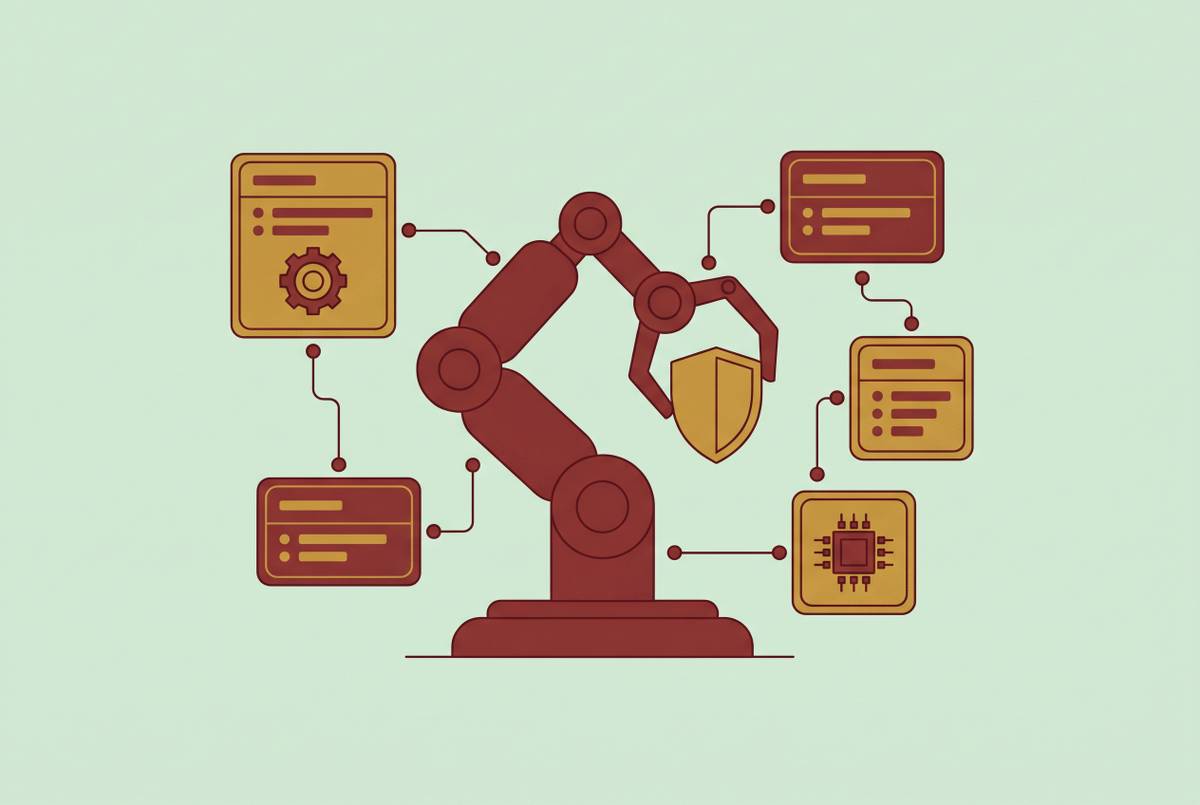
A specialty broker begins by reading the autonomy stack. Axis describes effective coverage work as requiring an understanding of how autonomous systems are designed, deployed, governed, and connected. Failure propagation is the essential diagnostic task. Sensor degradation, perception errors, unpredictable human-robot interactions, and identity or authentication failures across connected fleets create different paths to loss.
Those paths also spread responsibility among the providers of hardware, software, data, and cloud services. The broker must understand those relationships before assigning a scenario to a coverage line. Without that foundation, the submission cannot distinguish a bodily injury exposure from a software malfunction causing financial loss, or explain where both may arise from one event.
Axis calls the intended result “a well-managed autonomy risk to insurers.” That description needs evidence beneath it. Its proprietary risk assessment tool feeds into insurer applications and underwriting submissions, reducing duplicate information requests and shortening review cycles. The significance is the continuity between diagnosis and placement, rather than the production of a separate technical report that never informs the insurer’s questions.
Layering technical evidence to satisfy the algorithm: what structured signals the submission must carry
Class code selection determines how an automated system first interprets the business. Coding an autonomous hardware company as a generic technology firm can place it against the wrong loss history and screen it away from suitable specialty markets. Classification is therefore a substantive coverage decision. The structured description must reflect the physical system and its software-driven decisions, rather than emphasizing one to the exclusion of the other.
The same structured layer must also state the autonomy level. WTW explains that when robots make autonomous decisions based on what they have learned, liability can overlap among manufacturers, developers, operators, and maintenance providers. The submission must make that distinction readable during screening. Operational data, incident-response protocols, and testing-environment controls also belong in the application, where pre-population can accelerate scoring and reduce conservative loadings caused by incomplete information.
MCAP is an open-source, modular, serialization-agnostic container for heterogeneous timestamped robotics data, with an append-only structure that permits recovery of partially written files after power loss. No established insurance-underwriting role has been documented for it. Its technical properties may support a longitudinal account of perceptual health, but naming the format is not a documented scoring advantage.
Layering narrative evidence to satisfy the human underwriter: what the approval decision actually turns on
WTW asks whether a policy responds to the specific loss event AI could cause, rather than whether it responds to “AI” in the abstract. That distinction changes the narrative’s purpose. A description of technical sophistication is not enough. The underwriter needs to understand the material loss scenarios, the controls governing them, and the responsibility each participant bears when something goes wrong.
For the warehouse accident, that means explaining how responsibility could differ among the manufacturer, software developer, operator, and maintenance provider. Leaving those roles unresolved invites conservative assumptions about liability allocation. The narrative must also connect deployment conditions to operational controls. It is the place where the company demonstrates that its understanding extends beyond normal system performance to the circumstances of a claim.
WTW recommends that brokers work closely with clients to understand deployment, identify material loss scenarios, and evaluate them against the existing insurance program. Where wording is uncertain, it recommends engaging insurers to clarify intent and, where appropriate, amend the policy before a loss. The narrative starts that conversation. Its value lies in connecting a concrete failure scenario to agreed policy treatment so that the intended coverage holds when a claim arrives.
How contract requirements buried in customer agreements force the submission to address both audiences before the first deployment
Enterprise and government customers can make insurance a condition of deployment. Their agreements may require cyber limits, certificates, and terms that stay in force after the contract ends. Smaller vendors face these requirements too. A submission that omits the customer’s thresholds can produce coverage that appears adequate internally but yields a certificate that fails contract review. Insurance placement then becomes a go-to-market dependency rather than a task separate from commercial readiness.
The policy’s treatment of autonomy is as important as the stated limits. A generic placement may produce a certificate while leaving an AI exclusion in the underlying policy that conflicts with the required protection. A certificate does not resolve that conflict. A submission directed to carriers that explicitly cover autonomy gives the broker a basis for meeting both the procurement requirement and the underlying exposure.
This adds a commercial test to the two underwriting audiences. Structured fields must express the requested coverage and limits, while the narrative must explain the autonomous operations those terms are intended to protect. Technical quality alone cannot overcome a mismatch between the placed policy and the customer’s requirements. The submission must address that mismatch before the first deployment depends on approval.
What a completed two-register submission looks like in practice and where generic brokers fall short
A completed specialist submission maps autonomy level to the system’s decision-making architecture and allocates potential liability across the manufacturer, developer, operator, and maintenance provider. It documents logging and forensic readiness, including how the company would answer a carrier’s request for action history at claim time. The evidence of governance covers deployment controls, safety mechanisms in the testing-environment, and incident response. Each element has a defined underwriting purpose. It either makes the exposure legible during screening or supports judgment about a particular loss scenario.
The coverage review then examines AI exclusion wording across general liability, cyber, Tech E&O, and D&O, identifying applicable exclusions and responsive specialty endorsements. It also addresses whether Tech E&O and cyber have separate limits rather than a shared limit that one incident can exhaust. A generic submission built only from standard forms can omit those relationships. Axis explains that standard liability and cyber policies were not designed for autonomous systems and often leave out coverage for AI decision errors, autonomous failures, cyber-induced physical damage, and technology outages without physical loss.
Purpose-built programs instead reflect system design and can scale with fleets, automation density, and commercial exposure. Specialist placement may cost no more than the premium because it already includes broker commissions, though complex placements may carry a separate service fee. The distinction is a submission in which classification, technical evidence, loss scenarios, and policy wording describe the same risk without leaving the insurer to reconcile them.