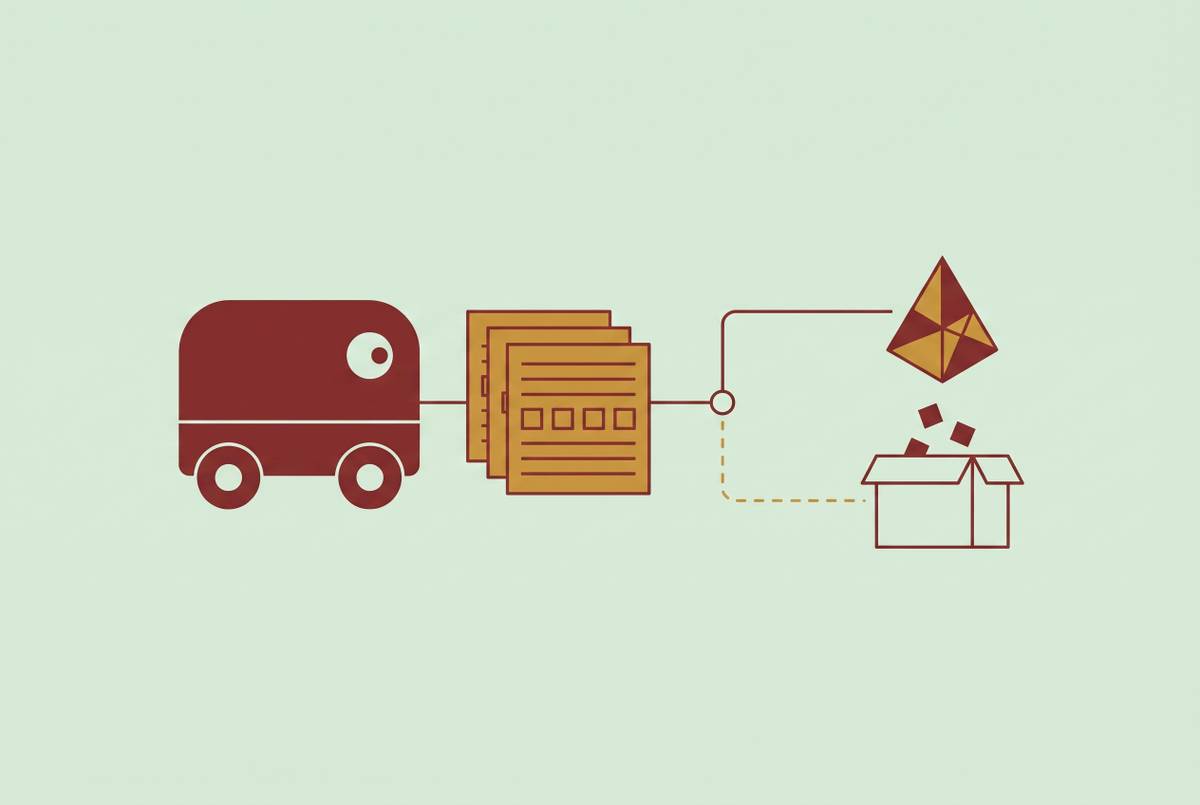
The Form Mismatch Signal Underwriting Models Emit When an Autonomous Vehicle Hardware Startup Is Binned as a General Manufacturer
Classifying an AV startup as a generic maker hides its real exposures.
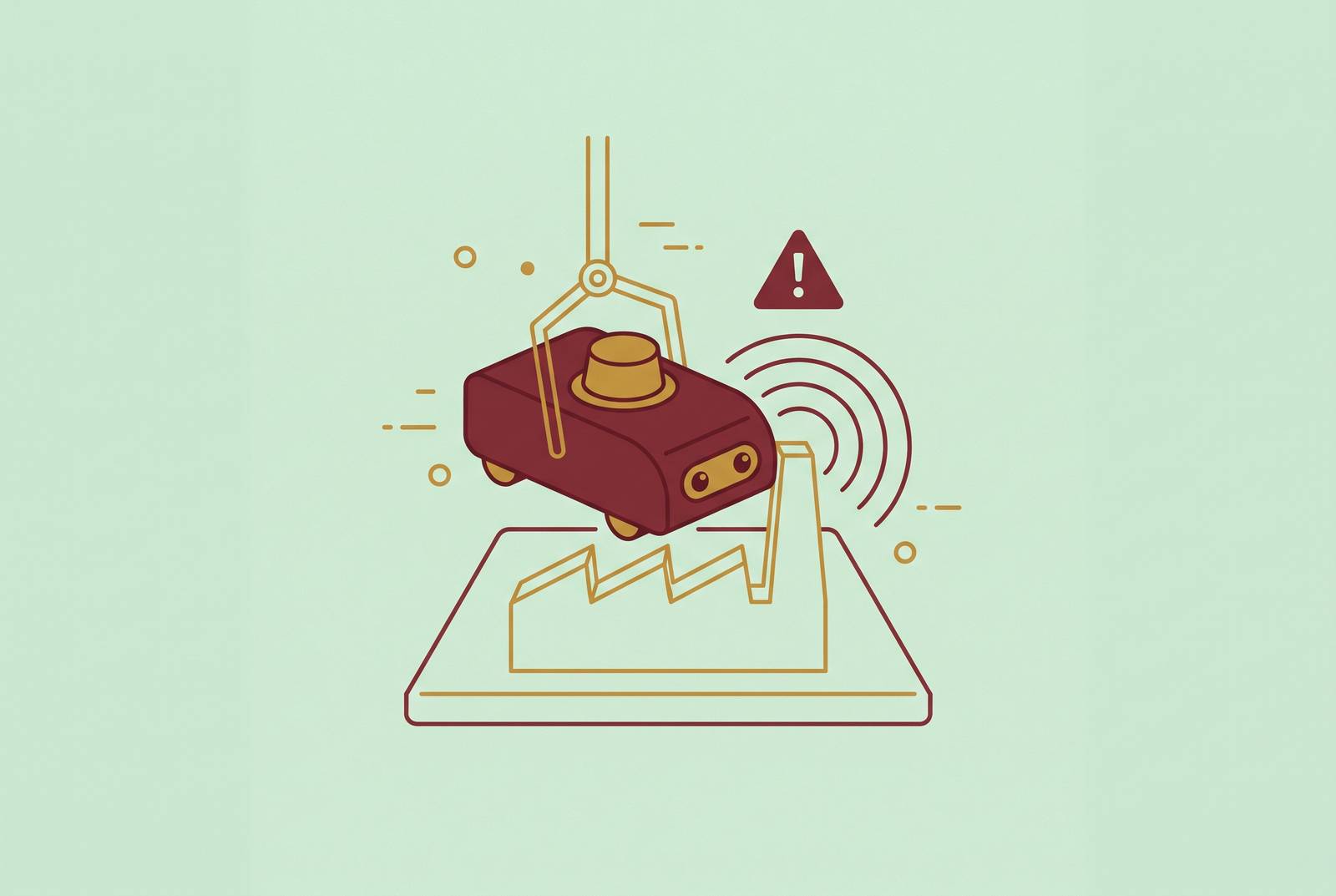
Underwriting submission quality for autonomous hardware depends on describing its manufactured product alongside the system’s decisions, deployment conditions, update process, and liability relationships. When an AV hardware startup is classified as a general manufacturer, the wrong exposure model shapes pricing and coverage across the program. The clearest warning is a submission that describes what the company ships but not what its deployed systems do.
Why an AV hardware startup's risk profile is structurally invisible to a general-manufacturer underwriting model
A founder hands a broker the company’s URL and receives a quote built for a widget maker. The submission shows low revenue, a small headcount, and no past claims, which makes the startup look easy to insure. But those inputs say little about the decisions an autonomous system makes or software failures across a fleet. The classification has filtered out the central exposure. A general-manufacturer SIC or NAICS code directs underwriting toward loss histories for companies without OTA firmware, algorithmic liability, or government testing permits.
When a submission reaches a carrier without a dedicated autonomy appetite, the underwriter may default to the nearest available manufacturing classification. Its historical data comes from separate events caused by people, while failures across software-defined vehicles can be linked. One firmware defect can affect every unit in use. Low revenue therefore does not establish low aggregate exposure, and a clean claims history cannot resolve that mismatch. SAE level provides another missing distinction because the system’s control over driving changes where liability may fall.
How OTA firmware updates turn a fixed-product risk into a continuous, evolving one that standard forms cannot track
OTA updates also change the exposure after underwriting. Traditional manufacturing underwriting treats the product’s risk as fixed at sale, while an autonomous vehicle can receive a new perception algorithm after delivery. That update changes the failure modes of deployed units without creating a new policy trigger. The hardware has not changed hands again. Nevertheless, the risk six months into the policy can differ substantially from the risk described at inception.
A standard general-manufacturer form has no mechanism for capturing that continuing change. The concrete consequence is an exposure that can grow between renewals without the carrier asking about it or the generic submission recording it. Renewal alone does not repair the form’s blind spot. The same static description can simply be submitted again, even though the software controlling the product has changed.
What the SAE level a company operates at actually means for which entity holds liability — and therefore which policy must respond
SAE level locates that changing product within the liability structure. At Levels 0–2, the driver remains responsible for driving, while the manufacturer retains exposure for its product. At Level 3 and above, system control begins shifting liability toward manufacturers and software providers. Level 3 is not a clean legal boundary. Responsibility can be shared or contested depending on the jurisdiction and circumstances, so the level is an underwriting reference point rather than a substitute for examining the deployment.
In a multi-vendor architecture, potential fault can extend to the OEM, software provider, sensor supplier, or another vendor. The coverage stack must reflect those relationships. A Level 3+ startup insured only as a parts vendor can face system-level liability that its program was not built to address. Government permits add a separate obligation, with California requiring a substantial government-mandated insurance bond for AV testing or deployment. A generic manufacturing policy does not establish that either exposure has been addressed.
How the general-manufacturer classification breaks the CGL policy before a claim is even filed
Commercial General Liability coverage can fail because of an endorsement as well as a price that is too low. ISO released three generative AI exclusion endorsements effective January 1, 2026, including CG 40 47 for a full exclusion, CG 40 48 for Coverage B only, and CG 35 08 for products and completed operations. CG 35 08 applies to bodily injury and property damage that arise from generative artificial intelligence in that part of the coverage. Its reach depends on the product and wording. Generative AI differs in scope from autonomous decision systems generally, and its use can bring a startup’s physical loss exposure within the exclusion.
Carrier adoption occurs individually and at renewal. A startup therefore cannot infer its coverage from the existence of the ISO forms, nor can it rely on an earlier policy that lacked them. The actual endorsement schedule is decisive. A submission describing conventional manufacturing may never prompt a review of how generative AI interacts with the product. The exclusion can then enter the program without that interaction being examined.
Where Tech E&O and product liability leave each other's trigger exposed for an AV hardware company
Tech E&O addresses wrongful acts by technology vendors and developers, while product liability addresses physical harm caused by a product. Autonomous hardware sits across that division. A sensor array causes a crash, but the resulting claim may turn on whether the failure arose from hardware or the software interpreting its output. The insured can hold both policies and still face uncertainty because their triggers and exclusions do not necessarily meet.
The reverse can happen when an algorithm causes financial loss or discrimination but no physical harm. Product liability does not cover that loss just because the algorithm runs inside hardware, and many Tech E&O forms do not cover physical injury caused by a driving decision. Hardware-dominant AV companies therefore need coordinated coverage in both lines. At Level 3+, disputed responsibility across the OEM and software stack can prolong the uncertainty. Establishing the cause can take months of litigation during which neither policy may pay.
Why cyber coverage as written does not reach the AV-specific threat surface — connected hardware, telemetry exfiltration, and spoofed sensor feeds
A vehicle is itself a connected endpoint. Its threat surface includes telemetry exfiltration, spoofed sensor feeds, and remote fleet hijacking. Standard cyber forms tend to use breaches as their triggers. Those triggers do not necessarily span the hardware failure, software vulnerability, and physical consequences that can arise from the same attack.
A spoofed sensor feed can cause a collision. The event has a cyber origin and a physical loss, yet neither label alone establishes which policy responds. A policy built around breaches may not cover the collision, and the wording of product liability coverage may leave room for dispute over the cyber trigger. Without connectivity architecture, telemetry flows, and OTA infrastructure, the cyber underwriter lacks the information needed to assess the vehicle’s actual exposure.
How AI exclusions in D&O filings remove board-level protection for a venture-backed AV startup at exactly the moment it is most exposed
Absolute AI exclusions in D&O filings put coverage at risk when investors bring claims over failures in autonomy deployment. The claim is different from the underlying accident. It concerns governance and investor-facing responsibility, but an applicable absolute exclusion can still remove protection because the claim arises from AI.
A venture-backed startup cannot treat D&O as separate from its autonomy exposure simply because the insureds are directors and officers. A general-manufacturer classification may never prompt the specialist review needed to identify that connection. The exclusion can remain unread until a claim. The ISO activity in CGL reinforces the need to examine AI wording across the program, but those CGL endorsements do not themselves establish what a D&O policy excludes. That requires review of the D&O form and its own endorsements.
Where inland marine and prototype hardware coverage fails when units are deployed at customer test sites
Prototype hardware, sensor arrays, and compute units at customer test sites can fall outside property coverage for scheduled locations, while product liability addresses harm caused by a product and leaves loss of the unit itself outside its scope. Inland marine is the appropriate instrument, specifically scheduled for pre-production hardware at customer sites, in transit, and at third-party facilities. Without it, a stolen or destroyed pilot unit may be uninsured.
How do you get an insurer to understand autonomous hardware rather than classify it as general manufacturing?
A conventional form collects revenue, headcount, claims history, and a general product description, leaving the underwriter to fit the business into an available manufacturing category. Completing every field cannot compensate for questions that were never asked. The submission must describe the operational exposure that the product label conceals.
That description includes what the AI system does, its SAE level and operational design domain, who uses it, and in which environments. It also states whether the system acts without human oversight, its OTA update cadence, and its training-data sources. Cybersecurity documentation adds the secure software development lifecycle, or SSDLC, penetration testing, and incident-response procedures. Customer indemnification provisions, third-party API dependencies, and model providers show who else bears responsibility and whose technology the insured relies on.
Documentation quality affects the underwriting outcome directly. Incorrect or outdated inputs can shape pricing, deductibles, or declinations regardless of the company’s actual safety record. A strong submission therefore supplies credible exposure data rather than relying on a clean loss history to speak for the system. It also gives the underwriter information for deciding whether the risk fits its appetite, rather than concealing an autonomy business inside a familiar manufacturing description.
How enterprise and government contract requirements surface the coverage gap before the company is ready to close it
Enterprise and government customers can require coverage that a generic manufacturing program does not provide, exposing the gap after a deal is already moving. Government testing permits can require substantial insurance bonds beyond the structure of a general CGL policy. Discovery during permit review compresses the time available to restructure the program.
Enterprise contracts usually require Tech E&O and cyber coverage, often with 30-day notice endorsements and additional insured status for general liability. Those provisions may be absent from the existing program and cannot be supplied retroactively after a claim. Exclusions create a further incompatibility. A customer may require product liability protection while the supplier has CG 35 08, which could exclude the generative-AI-related bodily injury or property damage that the customer requires it to cover.
How to read the signals that a current program was built for the wrong risk class
A founder can begin the diagnostic review with the declarations page, then move to the forms and endorsement schedules. The first signal is a motor vehicle parts or general manufacturing classification with no autonomy, robotics, or software-operations modifier. The next step is to request the full NAICS or SIC code used in the submission and compare it with the actual operations description. A code is evidence of how the business was presented.
The second signal is a CGL endorsement schedule that never addresses AI, autonomous systems, or robotics. Silence leaves coverage or exclusion undetermined and warrants review. The actual forms also need examination for CG 40 47, CG 40 48, and CG 35 08. The third signal is a lack of Tech E&O, or Tech E&O wording that excludes physical harm caused by hardware when product liability protection has not been arranged to cover that harm.
The fourth signal is cyber trigger language confined to data breaches or network intrusion without addressing connected hardware, telemetry, or OTA infrastructure. The fifth is prototype hardware absent from an inland marine or equipment floater schedule. The sixth is a D&O endorsement schedule that has not been reviewed for absolute AI exclusions since the January 2026 ISO effective date. That date serves only as a prompt to review D&O coverage. A licensed specialist broker can help guard against these risks by reading every policy before binding and building an autonomy-aware submission that shows these exposures.