How Submission Data Architecture Determines Whether an Autonomous Hardware Risk Routes to a Specialty Algorithm or a Generic Bin
Structured submission data decides whether robots get specialist cover.
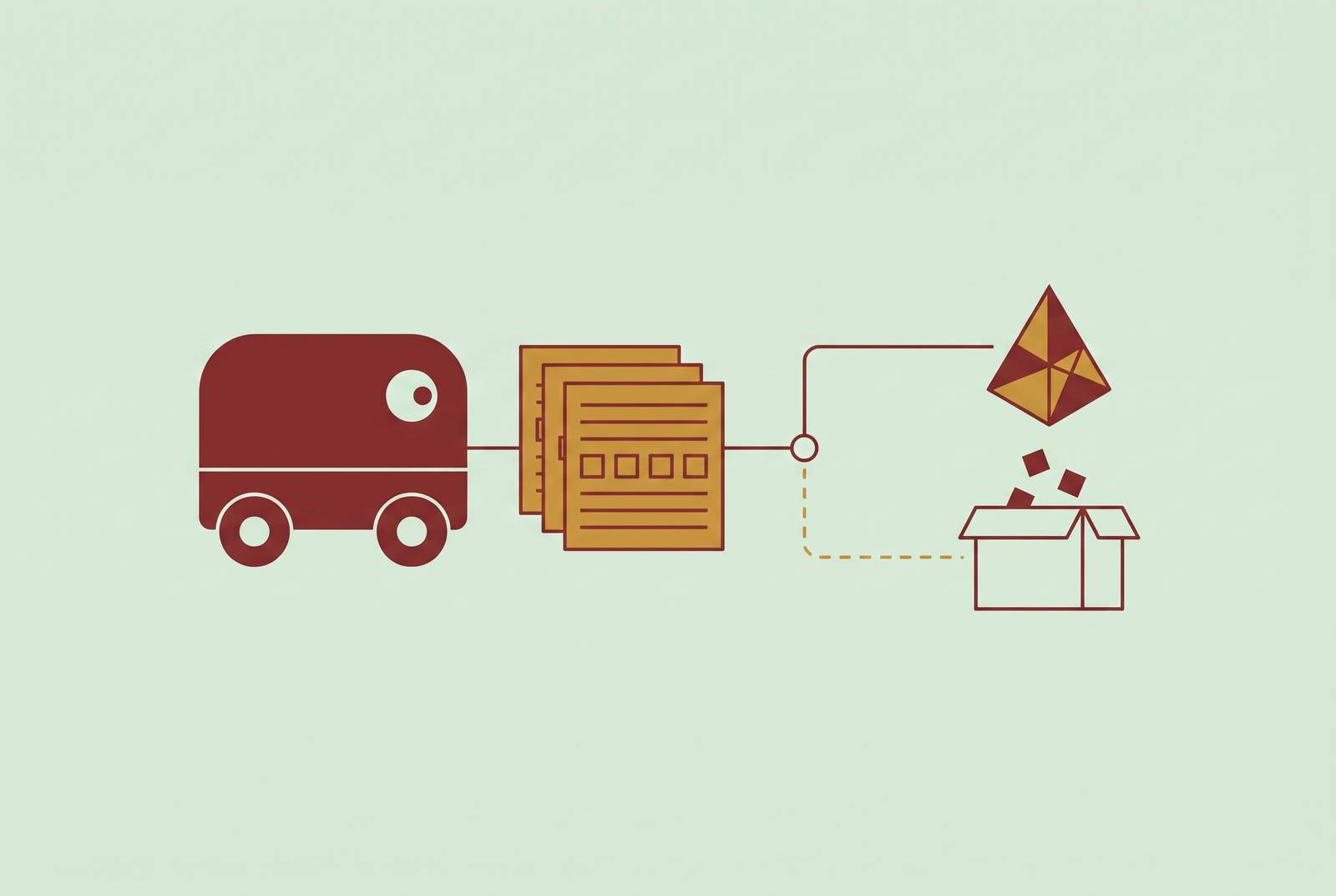
A high-quality underwriting submission for autonomous hardware helps a carrier recognize a specialist risk, while a poor-quality submission can lead to assignment to a generic commercial category where exclusions can leave the exposure uninsured. Structured evidence of deployment conditions, autonomous authority, safety controls, and software governance makes that distinction visible. The same evidence then gives a specialist underwriter a basis for adjusting price and coordinating coverage across the lines a physical AI loss can trigger.
Why the standard market is closing for autonomous hardware risks
Verisk's ISO division released three new commercial general liability endorsement forms on January 1, 2026, each of which excludes losses tied to generative AI. The forms are CG 40 47 01 26, CG 40 48 01 26, and CG 35 08 01 26. By mid-2026, filings in nearly every US state showed thousands of form adoptions. An autonomous hardware company can therefore enter the standard market with a physical liability exposure and receive wording that excludes the AI-related mechanism behind it.
The retreat extends beyond general liability. W.R. Berkley added an absolute AI exclusion to D&O cover that includes claims from actual or alleged AI use, deployment, or development. Its wording also reaches inadequate AI governance practices and statements about the insured's AI strategy. AIG, Allianz, AmTrust Financial, Arch Capital, Ascot, Axis, and other P&C carriers have filed to adopt or delay-adopt AI exclusions. These filings make the actual form and endorsements decisive.
Specialty markets are opening as standard markets cut back on cover. Access, however, depends on how the submission is constructed. A generic commercial description can steer an account toward a product that excludes the very losses the company wants to insure.
What physical AI actually does to a loss, and why standard policy categories break
WTW's 2026 physical AI report explains that robotics adds physical consequences to software risks. An incorrect software recommendation can become bodily injury, property damage, or operational disruption when a machine acts on it. Software behavior and physical damage are parts of the same event, while their insurance treatment may sit in different coverage lines.
A warehouse robot incident makes that mismatch concrete. Liability may involve a manufacturer responsible for a design flaw, a software developer responsible for algorithmic misjudgment, an operator with inadequate safety procedures, and a maintenance provider responsible for sensor failure. Those causes span product liability, general liability, professional liability, and cyber. The damaged property or injured person does not establish which policy responds. The cause, responsible party, and policy wording still have to align.
The NYU actuarial framework on agentic AI insurance describes systems that can independently generate insured events by authorizing transactions, modifying software, or interacting with physical environments. A human decision point need not intervene. Hallucinations, model drift, unsafe delegation chains, and unauthorized autonomous actions can cause losses without a network breach, leaving a cyber policy without the predicate needed to respond.
Fleet exposure makes the mismatch harder to price. A shared software update, cloud outage, or widely deployed platform vulnerability can affect thousands of devices simultaneously. Actuarial models built for deterministic machines such as industrial controllers, relays, and hydraulic systems were not designed for neural network misclassification, adversarial inputs, or emergent fleet behavior.
How do you get an insurer to understand your autonomous robot company?
Carrier intake systems make an initial routing decision in seconds from the signals present in a submission. Automated triage extracts risk attributes and scores them against underwriting appetite. Clean, in-appetite risks can pass straight through, complex cases enter a referral queue with context assembled, and out-of-appetite submissions can receive an automatic decline. An incomplete submission can therefore lose access to the person equipped to understand it.
Very few submissions in Specialty and E&S lines go through straight-through processing, so a person usually needs to review autonomous hardware risks. That makes correct referral essential. Only a small fraction of available structured data, and an even smaller fraction of unstructured data, currently enters specialty underwriting decisions. As a result, details of how the hardware works may have no effect on classification if they are buried in prose.
Production submissions also arrive as scanned PDFs, broker emails with multiple attachments, and descriptions that do not fit standard fields. A model trained on tidy ACORD forms can fail on a handwritten loss run. For an AI-enabled warehouse robot fleet, absent deployment conditions, software version history, training data governance, and loss control architecture leave little basis for specialist classification. The account can instead be declined or assigned to a commodity product.
Waymo's June 2026 recall of 3,871 robotaxis after vehicles entered closed freeway construction zones and continued driving at speed illustrates the exposure that intake must distinguish. The relevant signal is an autonomous vehicle operating in variable public environments. That description helps intake flag a risk for a specialist, but intake cannot settle how liability should be split.
The specific data signals that determine which bin a submission lands in
Historical loss runs do not exist at scale for autonomous systems, so specialists increasingly price architectural maturity alongside claims history. Third-party security audits and the frequency of adversarial testing help establish that maturity. A technical description alone is not enough. The submission must connect what the system can do with the limits placed on its actions and the evidence available after a failure.
Deployment environment is the first distinction that a generic description often obscures. Geography alone does not distinguish variable public space from a controlled warehouse floor, or human co-working from segregated operation. Those conditions define different physical exposures. Software update cadence and governance also belong in that description because the operating risk depends on how decision logic changes after deployment.
The next distinction is between asserted safety and demonstrable control. The WTW report and the NYU framework identify continuous telemetry, automated intervention, deterministic safeguards against runaway execution, and documented training datasets and validation boundaries as relevant signals. Granular permission boundaries show how the agent decision layer is isolated from raw system access. Without those details, a specialist cannot assess how far an autonomous error can propagate.
Evidence after an event is equally important. Audit logs must meet the burden of proof when an agent causes physical damage, and immutable execution trails must show what the agent did on its own. Organizations unable to produce these trails can be locked out of competitive insurance markets. Version history and change-control governance show whether a fleet underwritten last quarter now runs on different decision logic.
The Koop 2026 Physical AI & Robotics Risk Report identifies six documents that pre-empt nine in ten underwriting conditions. The finding favors specific documentation over an expansive narrative. Each missing signal leaves an unresolved classification or pricing question, increasing the chance that the submission reaches a generic category or a referral queue without the context needed to advance.
How documented safety controls directly affect price, not just coverage eligibility
The Koop report found that decisions in one robotics-specialist portfolio shifted from excluding risks to adjusting their price, while outright declinations fell sharply over the period studied. Companies documenting a safe-stop system paid materially less per dollar of revenue. Documentation makes an existing control available for underwriting. Yet only a small fraction of operators publish a safety page, leaving many controls outside the evidence an insurer can assess.
The pricing mechanism is explicit in the NYU framework. It proposes control-adjusted exposure measurement, under which governance, telemetry, and safeguard architecture modify the exposure score used to set premium. Documentation allows the underwriter to recognize a control, recognition changes the exposure assessment, and that assessment changes price. This is a proposed actuarial structure. It nevertheless explains why an implemented safeguard and an underwriting-visible safeguard have different commercial value.
Reinsurers are concerned about a shared software fault producing simultaneous losses across thousands of devices. Operators unable to demonstrate fleet isolation and update governance face upward pressure on premiums, while documented controls work in the opposite direction. Individual safe-stop evidence does not resolve that accumulation question. The submission also has to explain how common dependencies and software changes are governed.
The specialist portfolio evidence suggests that terms, rather than price alone, have become the main source of friction. A complete submission helps by answering questions that would otherwise lead to conditions or restrictions. Cyber insurance took a similar path, using exposure assessment, scenario analysis, and control-adjusted pricing before it had much historical claims data. Autonomous hardware operators need not wait for mature loss datasets to make their controls visible to pricing.
How the coverage stack should be constructed for autonomous hardware once routing works
Correct routing helps put coverage lines together so the account gets more than a new label on a monoline policy. The NYU framework proposes complementary cyber, technology E&O, product liability, performance-warranty, and affirmative AI-liability coverages, supported by explicit allocation mechanisms and dedicated AI aggregates. The submission must anticipate those interfaces. If it describes only a conventional commercial liability exposure, it leaves the specialist without the multi-line account needed to construct that architecture.
General liability addresses bodily injury and property damage caused by robotic systems, but legacy wording may not contemplate software or AI failure mechanics. Product liability addresses the product exposure, while technology E&O or professional liability addresses client financial loss from faulty software or service performance. Affirmative wording is important where hallucination, bias, or drift would otherwise remain ambiguous. The line's name does not settle the claim. Coverage depends on how the form treats the actual failure.
Cyber can address prompt-injection attacks leading to data exfiltration and physical consequences from compromised robots. Its core coverage may leave out pure AI performance failure when there is no security or media predicate. Workers' compensation covers employees hurt by workplace robots, while business interruption covers disruption to work from failure or downtime, including fleet outages after an update.
Inland marine can cover ground control workstations, RTK base stations, charging racks, transport cases, comms gear, and generators, subject to the form. A stored spare component may qualify neither as aircraft under hull coverage nor as scheduled inland marine property. Spacecraft and satellite insurance is separate and covers construction, launch, and in-orbit operation through specialist aviation/space markets.
D&O covers risks from governance that physical liability coverage cannot cover. A shareholder allegation that the board misrepresented AI capabilities or risk posture may encounter the absolute exclusion wording described earlier. The framework's proposed coordination of cyber and technology E&O with standalone AI liability and predefined loss allocation rules addresses a different gap between coverage lines. Both call for a review of the policies before binding because policy labels alone do not show how the coverage works.
What operators can do now, and why a specialist broker is the structural solution
The practical response is to prepare engineering evidence in a form underwriting can use. Operators should document the safe-stop system, manual override protocol, and kill-switch architecture rather than leave those controls legible only to engineering. They should produce and retain immutable audit logs of autonomous actions and establish that the forensic trail can be provided at claim time. Evidence must be both available and interpretable. A verbal explanation of strong controls cannot substitute for a submission that exposes them to classification and review.
Operators should document version history, update governance, and change-control procedures, while presenting deployment conditions as structured fields covering operating conditions, human co-working parameters, geographic scope, and fleet size. Every hardware asset, including supporting equipment, should have a specific coverage form assigned to it before binding. This preparation connects the technical account to the insurance contract. It also prevents the deployment description from becoming obsolete as soon as the software changes.
A specialist broker supplies the translation between those records, carrier appetite, and policy wording. That broker's role is to build a submission for autonomous machines, read every policy before binding, identify AI exclusions, and coordinate the lines that could respond to one event. Preparation and contract review are inseparable here. Routing to a specialist has limited value if the resulting policy still excludes the mechanism that creates the exposure.
Broker commissions are already included in the premium whether a generalist or specialist places the policy. Working with a specialist who constructs the submission correctly therefore costs nothing beyond that premium, while giving documented controls a route into the underwriting decision. The operator's leverage begins before quotation, in the fields and evidence used to describe the risk. It becomes protection only when that description is reflected in the bound coverage.